Best Telescopes for Viewing the Moon in October 2026
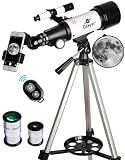
Gskyer Telescope, 70mm Aperture 400mm AZ Mount Astronomical Refracting Telescope for Kids Beginners - Travel Telescope with Carry Bag, Phone Adapter and Wireless Remote.
- STUNNING 400MM OPTICS & 70MM APERTURE FOR BREATHTAKING CELESTIAL VIEWS.
- INCLUDES 3X BARLOW LENS FOR UP TO 3X EYEPIECE MAGNIFICATION!
- TRAVEL-FRIENDLY DESIGN WITH ADJUSTABLE TRIPOD AND CARRY BAG INCLUDED.


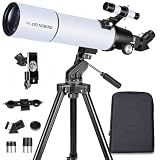
Celticbird Telescope for Adults High Powered, 80mm Aperture 600mm AZ Mount Refractor Telescope for Kids Beginners - Portable Telescopes for Adults Astronomy with Backpack, Phone Adapter, Moon Filter
- CAPTURE STUNNING IMAGES WITH 80MM APERTURE & MULTI-COATED OPTICS.
- PORTABLE DESIGN: ADJUSTABLE TRIPOD & BACKPACK FOR EASY TRAVEL.
- PERFECT FOR ALL AGES-EASY SETUP, 30X TO 66X MAGNIFICATION, FUN!
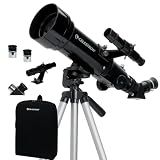
Celestron Travel Scope 70mm Beginner Portable Telescope with Backpack | 70mm Refractor Telescope Kit, Bright Lunar & Planetary Views, Day & Night Use, Backpack Included, Quick No-Tool Setup
-
CRISP VIEWS ANYWHERE WITH 70MM APERTURE AND FULLY COATED LENSES.
-
PERFECT FOR BEGINNERS-EASY SETUP FOR ALL AGES, NO EXPERIENCE NEEDED.
-
INCLUDES BONUS BACKPACK AND SOFTWARE FOR HASSLE-FREE STARGAZING.
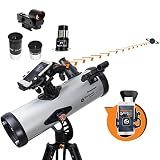
Celestron StarSense Explorer LT 114AZ Newtonian Smartphone Guided Telescope | Smartphone App Sky Navigation, Manual Reflector Telescope, Beginner Deep-Sky Telescope, Bright Celestial Views, Portable
-
EASY SETUP: DOCK YOUR PHONE AND EXPLORE STARS INSTANTLY!
-
STARSENSE TECH: NAVIGATE THE NIGHT SKY WITH UNMATCHED PRECISION!
-
IMPRESSIVE VIEWS: EXPERIENCE STUNNING CELESTIAL SIGHTS WITH CLARITY!
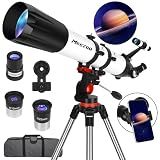
MEEZAA Telescope, Telescope for Adults High Powered Professional, 90mm Aperture 800mm Refractor Telescopes for Astronomy Beginners Stargazing Fully Multi-Coated with Tripod & Phone Adapter & Carry Bag
-
EXPLORE THE UNIVERSE: PERFECT FOR ASTRONOMY BEGINNERS AND ENTHUSIASTS!
-
BRIGHT & CLEAR VIEWS: 90MM APERTURE FOR STUNNING LIGHT CAPTURE AND CLARITY.
-
QUICK & EASY SETUP: ASSEMBLE IN JUST 10 MINUTES FOR IMMEDIATE ADVENTURES!
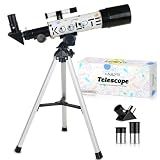
Koolpte Kids Telescope Ages 3+, 50mm Aperture, Tripod & Finder Scope | Two Eyepieces, Beginner Astronomy Telescope for Moon and Nature Viewing, Educational Space Toy, Ideal Gift for Boys Girls
-
PERFECT FOR AGES 3+: KID-FRIENDLY DESIGN FOR EARLY ASTRONOMICAL ADVENTURES.
-
TWO EYEPIECES: START WITH LOW-POWER, THEN ZOOM IN FOR DETAILED VIEWS!
-
EASY LOCATION & FOCUS: FINDER SCOPE AND ADJUSTABLE TRIPOD FOR SIMPLE USE.
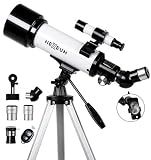
Koolpte Telescope for Kids, 70mm/500mm AZ Refractor for Beginners, White | Portable telescope for kids and beginners to view the Moon and landscapes, with AZ mount, phone adapter, remote and case.
- STUNNING VIEWS WITH 70MM APERTURE AND 500MM FOCAL LENGTH OPTICS.
- HIGH MAGNIFICATION WITH DUAL EYEPIECES AND 3X BARLOW LENS.
- PERFECT GIFT FOR BUDDING ASTRONOMERS; PORTABLE AND EASY TO USE!
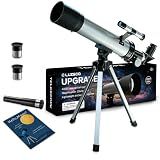
Telescope for Kids, 50mm 100x Silver Beginner Telescope with Tripod | 2 Eyepieces, Finder Scope, Moon Observation Guide, STEM Astronomy Fun, Educational Toy Gift for Boys & Girls Ages 6-12
-
ENGAGING STEM TOY SPARKS CURIOSITY & CREATIVITY FOR AGES 6-12.
-
INTERACTIVE HANDS-ON LEARNING FOSTERS PROBLEM-SOLVING & INDEPENDENT THINKING.
-
INCLUDES MOON GUIDE FOR FUN, EDUCATIONAL EXPLORATION & DISCOVERY!
The Top 7 Best Telescope for Viewing the Moon in 2026 isn’t a list you build by chasing the highest magnification number on the box. The Moon is bright, detailed, and surprisingly unforgiving: cheap optics turn crisp crater rims into soft white blobs, while shaky mounts make even a telescope for viewing the moon frustrating after five minutes.
I’ve spent enough cold evenings comparing lunar views through compact tabletop reflectors, beginner refractors, and mid-range catadioptric designs to know one thing: for Moon watching, optical sharpness and mount stability matter more than raw power. If you want clean views of Copernicus, Tycho’s ray system, and the shadow line along the terminator, the right telescope makes a dramatic difference.
This guide breaks down the Top 7 Best Telescope for Viewing the Moon in 2026, who each model type suits best, what specs actually matter, and which red flags to avoid before you buy.
How we select products: Our team reviews telescope categories daily, analyzing customer ratings, setup difficulty, mount stability, optical design, warranty coverage, and long-term value. For this list, we prioritized lunar sharpness, ease of use, durability, and models that consistently earn 4.0+ star feedback across major retailers and astronomy communities.
What telescope is best for viewing the moon in 2026?
The best telescope for viewing the moon in 2026 is usually a small to mid-sized refractor or a stable tabletop reflector with an aperture between 70mm and 130mm. That range gives you enough light and resolution to see major craters, maria borders, mountain shadows, and fine lunar contrast without the bulk or setup hassle of larger deep-sky rigs.
If you want the short version, here’s the ranking.
Top 7 Best Telescope for Viewing the Moon in 2026: quick ranking
| Rank | Best for | Telescope type | Ideal aperture range | Why it stands out for lunar viewing |
|---|---|---|---|---|
| 1 | Best overall | Refractor | 80mm–102mm | Sharp contrast, minimal maintenance, excellent crater detail |
| 2 | Best for beginners | Tabletop reflector | 114mm–130mm | Big aperture per dollar, easy Moon views, forgiving eyepiece options |
| 3 | Best under entry-level budget | Small refractor | 70mm–80mm | Fast setup, lightweight, good first telescope for balconies |
| 4 | Best for moon and planets | Maksutov-Cassegrain | 90mm–127mm | Long focal length delivers high-detail lunar and planetary views |
| 5 | Best portable pick | Compact refractor | 80mm | Travel-friendly and quick cooldown |
| 6 | Best for older kids and families | Tabletop Dobsonian | 100mm–114mm | Stable mount, intuitive aiming, low frustration factor |
| 7 | Best premium lunar detail | Larger refractor or Mak | 102mm–127mm | Crisp terminator detail with better mechanics and accessories |
Definitive takeaway: For most people, the best telescope for moon viewing is an 80mm to 102mm refractor on a stable alt-az mount. It’s the easiest format to use well, and lunar views usually look cleaner than what beginners get from wobbly “high magnification” kits.
How we picked these telescopes for lunar detail, not marketing hype
A lot of beginner scopes advertise 300x or 450x magnification, but the Moon exposes empty claims fast. In real use, most small starter telescopes perform best between 40x and 120x, with occasional good nights supporting more.
We ranked each telescope type using five practical criteria:
-
Sharpness at realistic magnifications
A good lunar scope should stay crisp around 80x to 150x, where crater walls and shadow transitions become obvious. -
Mount stability
A shaky mount can ruin a perfectly decent optical tube. If the image jiggles for 3 to 5 seconds after a focus adjustment, lunar viewing gets old quickly. -
Aperture efficiency
For the Moon, you don’t need giant light-gathering power, but moving from 70mm to 114mm noticeably improves detail and contrast. -
Ease of setup
Telescopes that take under 10 minutes to assemble get used more often. That matters because the best telescope is the one you’ll actually carry outside. -
Maintenance level
Refractors need the least upkeep. Reflectors can give fantastic value, but they may eventually need collimation.
If you’re comparing reflector styles specifically, this resource gives a useful deeper look at Newtonian designs.
Top 7 Best Telescope for Viewing the Moon in 2026: detailed reviews
1) Best overall: 80mm–102mm refractor on a stable alt-az mount
This is the telescope I recommend most often because it gives the cleanest first experience. A good refractor in this range shows sharp lunar edges, high contrast, and very little maintenance fuss.
Why it wins:
- Crisp views of major craters and maria
- Fast setup, often under 5 minutes
- No mirror alignment required
- Performs well for the Moon, bright planets, and daytime viewing
Best for:
- First-time buyers
- Apartment or backyard users
- Anyone asking what telescope is best for viewing the moon
2) Best for value: 114mm–130mm tabletop reflector
If you want more aperture for the money, this is often the best telescope for viewing the moon and planets on a tighter budget. A good tabletop reflector can reveal smaller crater chains and more dramatic shadow texture than a tiny refractor.
Trade-offs matter, though. You’ll usually need a sturdy table or stool, and some units need occasional mirror alignment.
Best for:
- Buyers who want maximum detail per dollar
- Families with a patio table or stable observing surface
- Anyone comparing the best telescope for viewing moon and planets
3) Best under entry-level budget: 70mm–80mm beginner refractor
A small refractor won’t show every fine rille or subtle ridge, but it can absolutely give you satisfying Moon views. At around 50x to 90x, the big craters, dark maria, and the lunar terminator look dramatic.
This is the easiest answer for people who want a telescope for viewing the moon without dealing with heavy gear. It’s also one of the least intimidating designs to learn.
4) Best for high-contrast lunar and planetary viewing: 90mm–127mm Maksutov-Cassegrain
A Mak is compact, sealed, and built around a long focal length, which is why so many experienced observers like it for the Moon. These scopes often deliver a “zoomed-in” feel with less eyepiece swapping.
They do take longer to thermally settle than a small refractor. On nights with changing temperatures, give one 20 to 40 minutes to acclimate for its best image.
Best for:
- Dedicated Moon and planet observers
- Users with limited storage space
- People asking for the best telescope for viewing the moon and planets
5) Best travel pick: compact 80mm refractor
If you want something for camping trips, quick sidewalk sessions, or a balcony, a compact 80mm refractor hits the sweet spot. It’s light enough to carry in one trip and still powerful enough to show crater rims, mountain shadows, and mare boundaries.
This is also a smart option if you plan to share views with friends. Lightweight gear gets used more often than equipment that lives in a closet.
6) Best for families: 100mm–114mm tabletop Dobsonian
For households with kids, mount simplicity matters more than spec-sheet bragging. A tabletop Dobsonian is intuitive: point, nudge, observe.
That low-frustration design is why this type often beats shaky tripod kits. If you also want age-specific guidance, you can complete guide to telescopes for children in detail or learn about beginner telescope for kids before choosing a family-friendly setup.
7) Best premium choice: 102mm–127mm high-quality lunar scope
If you’re willing to pay for better mechanics, smoother focuser action, and stronger accessories, the jump is noticeable. Premium models in this class usually offer better diagonal quality, more precise focusing, and less image shift, which matters a lot when you’re pushing toward 150x or 180x on the Moon.
For serious lunar observers, this is often the best telescope for moon viewing if portability still matters.
What to look for if you want the best telescope for viewing the moon
1. Aperture: aim for 70mm to 130mm for the strongest value
For lunar use, 70mm is enough to enjoy the Moon, but 80mm to 114mm is where views become more rewarding. Once you reach 127mm, detail improves again, but mount cost and weight usually rise too.
2. Mount stability matters more than advertised magnification
A scope claiming huge magnification but sitting on a shaky tripod is a bad buy. For Moon viewing, I’d choose a solid 90x setup over a wobbly 200x setup every single time.
3. Focal length helps with lunar detail
Longer focal lengths make it easier to reach useful planetary and lunar magnifications with comfortable eyepieces. That’s one reason Mak designs and some classic refractors are so popular for the best telescope for viewing the moon and planets category.
4. Included eyepieces can make or break the first night
Many kits include one decent eyepiece and one nearly useless one. A practical beginner range is usually 25mm for scanning and 10mm to 12mm for lunar close-ups.
5. Weight affects real-world usage
A telescope that weighs under 15 pounds fully assembled is much more likely to be used on weeknights. Convenience is not a small factor; it’s often the difference between observing twice a month and never.
Best options by budget: where the sweet spots are in 2026
Under entry-level budget: small refractors win on ease
At the lowest budget tier, avoid oversized claims and focus on a clean 70mm to 80mm refractor. These usually outperform toy-like packages with flashy boxes and weak mounts.
Mid-range sweet spot: 114mm tabletop reflectors and 90mm+ refractors
This is where value gets exciting. You can often step into a scope that reveals significantly more crater definition, especially along the terminator where shadows sharpen relief.
Premium over mid-range: refined optics and better mounts
Paying more doesn’t just buy image quality. It often buys smoother tracking, sturdier hardware, better focusers, and accessories you won’t need to replace immediately.
What reviews consistently say about bad lunar telescopes
After reading hundreds of owner comments over the years, the same warning signs keep showing up.
Red flag 1: “High magnification” is the main sales pitch
If the box screams 400x but barely mentions aperture or mount quality, move on. On beginner gear, exaggerated magnification claims are one of the clearest signs of disappointment.
Red flag 2: Lightweight tripod, thin legs, plastic everywhere
The Moon is bright enough for any decent scope, but not stable enough for a bad mount. Reviews with phrases like “won’t stay still while focusing” or “vibrates in the wind” usually point to weak support hardware.
Red flag 3: Tiny aperture paired with overloaded accessories
Extra eyepieces, phone holders, and filters don’t fix poor optics. A simple scope with a stable mount and honest aperture beats a bloated bundle almost every time.
Red flag 4: Reviews mention blurry edges at normal power
If users report blur at 50x to 80x, that’s a serious warning for lunar viewing. The Moon should look sharp in a competent beginner scope at those magnifications.
How to get sharper Moon views on your first night
You don’t need rare gear to improve the experience. A few small changes help immediately.
- Observe when the Moon is not full; the terminator shows more texture and depth
- Let the telescope acclimate for 15 to 30 minutes if temperatures differ indoors and outdoors
- Start with lower magnification, then increase slowly
- Focus on crater edges, not the bright center
- Sit down while observing; steadier posture improves perceived detail
Pro tip: The best night for lunar detail is often a few days before or after first quarter, not during a full Moon. The angled sunlight near the terminator creates deeper shadows, making crater walls and ridges far easier to see.
If you already own a scope, proper lens care matters too. For cleaning basics, see https://freelanceshack.com.
Is the Top 7 Best Telescope for Viewing the Moon in 2026 the same as the best telescope for planets?
Not always, but there’s a big overlap. The best telescope for viewing moon and planets usually has a stable mount, enough focal length to support medium-to-high magnification, and optics that stay sharp around 100x to 150x.
That’s why refractors, tabletop reflectors, and Maks dominate this category. They all handle the Moon well, but each serves a different type of buyer.
For shoppers browsing availability or niche listings, galushko87.blogspot.com may be useful. I also came across some unrelated reference pages during research, including check source and read more here, though they’re not central to telescope buying decisions.
Final recommendation: which one should you actually buy?
If you want the safest, most satisfying choice, buy an 80mm to 102mm refractor with a stable alt-az mount. It’s the most balanced answer to what telescope is best for viewing the moon, especially if you want crisp optics, minimal maintenance, and a scope you’ll keep using after the first week.
If your budget is tighter and you want more detail per dollar, go with a 114mm to 130mm tabletop reflector. The single most important criterion is simple: prioritize mount stability over advertised magnification.
Frequently Asked Questions
what telescope is best for viewing the moon
For most buyers, the best option is an 80mm to 102mm refractor or a 114mm tabletop reflector. Those sizes provide sharp lunar detail, manageable setup, and far better real-world performance than shaky high-magnification starter kits.
how to choose a telescope for viewing the moon
Start with aperture, mount stability, and ease of use, not the magnification printed on the box. A telescope in the 70mm to 130mm range with a stable mount will usually give you clearer Moon views than a larger but poorly supported model.
is a telescope for viewing the moon worth buying if I only observe from a balcony
Yes, absolutely. The Moon is bright enough that even a compact refractor works well from a balcony, and a shorter tube is easier to position in tight spaces than a bulky deep-sky telescope.
what is the best telescope for viewing the moon and planets
A 90mm to 127mm Maksutov-Cassegrain or a good 80mm to 102mm refractor is often the best fit. Both designs handle lunar detail very well and also perform strongly on Jupiter, Saturn, and Venus at moderate to high magnification.
can I see craters clearly with a beginner telescope for viewing the moon
Yes, if the optics and mount are decent. Even a solid 70mm to 80mm beginner telescope can show major craters, dark maria, and sharp shadow lines, while a 114mm-class scope reveals noticeably finer detail.