
Best Kotlin Programming Books to Buy in October 2026
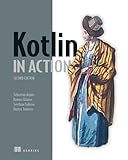
Kotlin in Action, Second Edition


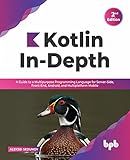
Kotlin In-Depth: A Guide to a Multipurpose Programming Language for Server-Side, Front-End, Android, and Multiplatform Mobile (English Edition)
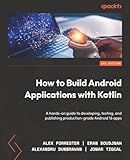
How to Build Android Applications with Kotlin: A hands-on guide to developing, testing, and publishing production-grade Android 16 apps
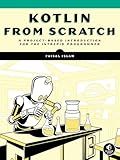
Kotlin from Scratch: A Project-Based Introduction for the Intrepid Programmer
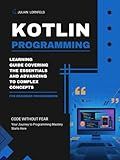
Kotlin Programming: Learning Guide Covering the Essentials and Advancing to Complex Concepts
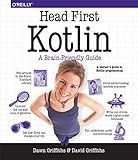
Head First Kotlin: A Brain-Friendly Guide
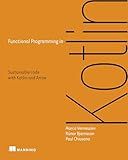
Functional Programming in Kotlin
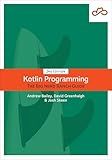
Kotlin Programming: The Big Nerd Ranch Guide
Kotlin Programming, In 8 Hours, For Beginners, Learn Coding Fast: Kotlin Language Crash Course Textbook & Exercises (Cookbooks in 8 Hours)
In Kotlin, we use ::class.java to get the java.lang.Class object of a class or type. This is commonly used in scenarios where we need to reflect on the class itself, such as when working with libraries that require passing class objects as parameters, or when using Java-based APIs that expect class objects. By using ::class.java, we can obtain the necessary Class object to interact with the underlying Java components effectively.
What is the return type of ::class.java in Kotlin?
The return type of ::class.java in Kotlin is java.lang.Class<out T>, where T is the type of the object or class being referenced by ::class.
How to handle class name collisions with ::class.java in Kotlin?
One way to handle class name collisions in Kotlin when using the ::class.java syntax is to use the fully qualified class name when referencing the class. This way, you can ensure that you are referencing the correct class and avoid any collisions.
For example, instead of writing:
val myClass = MyClass::class.java
You can write:
val myClass = com.example.MyClass::class.java
This way, you can disambiguate between classes with the same name but in different packages and ensure that you are referencing the correct class.
How to pass the class reference as a parameter in Kotlin using ::class.java?
In Kotlin, you can pass a class reference as a parameter using the ::class.java syntax. Here's an example to demonstrate this:
fun printClassName(clazz: Class<*>) { println("Class name: ${clazz.simpleName}") }
fun main() { val myClass = MyClass::class.java printClassName(myClass) }
class MyClass { // Class definition }
In this example, we created a function printClassName that takes a Class parameter and prints the simple name of the class. In the main function, we obtain the class reference using ::class.java and pass it to the printClassName function.
This way, you can pass class references as parameters in Kotlin using the ::class.java syntax.
What is the syntactic sugar aspect of ::class.java in Kotlin?
In Kotlin, the syntax ::class.java is a form of syntactic sugar that allows you to access the Java class object of a Kotlin class. This syntax is shorthand for calling the java property on the kotlin.reflect.KClass object. By using this syntax, you can easily obtain the corresponding Java Class object for a Kotlin class without having to explicitly call the java property.